
If you've been keeping up with recent Wear OS updates, you might have heard about a shift in how watch faces are built. With Wear OS 5, Google has officially designated the Watch Face Format (WFF) as the required standard for watch face submissions to the Google Play Store. Older, code-heavy watch faces are being phased out in favor of this new approach.
But what exactly is the Watch Face Format, and why did Google take this stance? In this article, we'll explain the technical reasons behind WFF, how it benefits smartwatch battery life, and what it means for developers and everyday users.
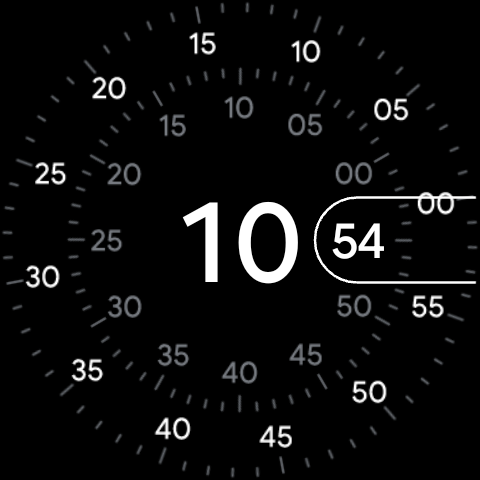
What is Watch Face Format (WFF)?
In older versions of Wear OS, watch faces were full Android applications. They were written in Java or Kotlin, packed inside APK files, and ran custom code directly on the watch. Developers had complete freedom, but this meant watch faces executed active logic loop files continuously to render clock hands, track complications, and display animations.
Watch Face Format (WFF) is a declarative, XML-based framework developed in partnership with Samsung. Instead of containing executable code, a WFF watch face is simply a text-based configuration file that describes the visual layout (colors, text paths, image placements, and math expressions). The Wear OS operating system reads this XML file and renders the face natively.
The Battery Life Breakthrough
Because WFF does not run custom background code, the Wear OS system can delegate the rendering of the clock face to low-power co-processors (often called microcontrollers or MCU chips). This allows the watch to update the time and step counter while the main, power-hungry application processor sleeps, saving massive amounts of battery.
Why WFF Matters: The Core Benefits
Transitioning from code-based designs to declarative XML profiles provides several significant advantages for the smartwatch ecosystem:
1. Dramatically Improved Battery Life
Traditional Java/Kotlin watch faces required the main system CPU to wake up and process frame redraws constantly. WFF watch faces run zero executable code on the main processor. By shifting rendering tasks to ultra-low-power hardware, WFF helps extend smartwatch battery life—especially when utilizing Always-On Display (AOD) modes.
2. Uncompromising Security
Since WFF files are pure XML configurations rather than compiled binaries, they cannot execute malicious code, access local filesystems, or transmit unauthorized background data. Users can download custom watch faces from the Play Store without worrying about security breaches.
3. Automatic Performance Optimization
When Wear OS receives a WFF file, it handles frame rates and graphics processing natively. If Google updates the system graphics engine, every WFF watch face immediately gains those performance improvements and optimizations without the original creator needing to update their code.
| Feature comparison | Legacy Watch Faces (Kotlin/Java) | Watch Face Format (XML) |
|---|---|---|
| Execution Method | Runs custom binary code in the background. | Parsed and rendered natively by Wear OS. |
| Battery Impact | High (prevents deep CPU sleep states). | Very Low (delegates to low-power co-processors). |
| Security Risk | Moderate (requires standard app security checks). | Zero (cannot execute code or access data). |
| Maintenance | High (requires updates for new API versions). | Low (updates automatically with OS changes). |
What This Means for Smartwatch Users
If you are an everyday smartwatch owner, the most immediate change is that older watch faces you purchased years ago may not be installable on newer Wear OS 5 devices. Google now requires the Play Store to restrict watch face downloads on Wear OS 5 to those built using WFF.
While this might seem frustrating initially, the trade-off is clear: watch faces will look crisper, run smoother, load faster, and consume significantly less battery. Creators are actively updating their popular designs to the new XML standard, so your favorite faces will likely return with improved efficiency.
Conclusion
The Watch Face Format (WFF) represents a significant evolutionary step for Wear OS. By eliminating code execution on the main processor and standardizing design layouts with XML, Google and Samsung have addressed the two biggest complaints of smartwatches: battery drain and sluggish performance. The future of smartwatch design is clean, secure, and highly efficient!